Syncing Screens: How Unified Progress Systems Are Reshaping Multiplayer Logic Challenges Across Mobile and Desktop Platforms
Written by Bianca Schulz · May 16, 2026
Syncing Screens: How Unified Progress Systems Are Reshaping Multiplayer Logic Challenges Across Mobile and Desktop Platforms
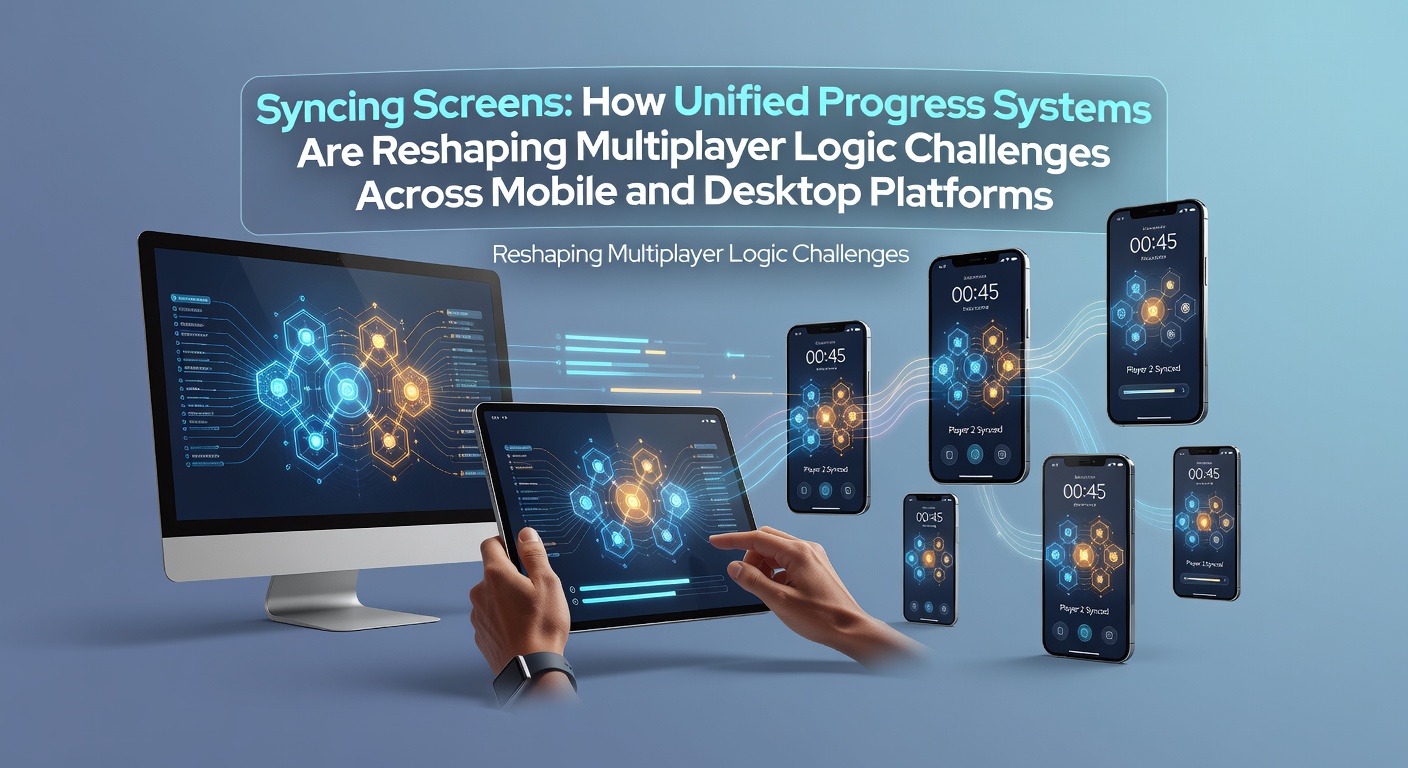
Unified progress systems track player advancement across devices through centralized servers that maintain identical game states in real time, and developers have expanded these frameworks considerably since early cloud-based implementations first appeared. Mobile interfaces rely on touch gestures while desktop setups emphasize keyboard and mouse precision, yet both now feed into the same logic engine that updates shared progress without requiring separate save files. Data from industry reports indicates that such synchronization reduces session interruptions when users switch platforms mid-game, and observers note the approach has become standard in titles released after 2024.
Mechanics Behind Cross-Device State Management
Central servers process inputs from each device and reconcile differences in frame rates or control schemes before broadcasting updated states back to all connected clients. Logic challenges in these environments involve puzzle elements that demand consistent rule application, such as pattern recognition sequences or resource allocation tasks, and the unified system ensures that a solution completed on a mobile screen registers instantly on a desktop display. Research from academic institutions shows that latency compensation algorithms handle most discrepancies under 50 milliseconds, while users experience seamless continuation rather than repeated setup steps. And developers integrate conflict resolution protocols that prioritize the most recent valid action when simultaneous inputs arrive from different platforms.
Adoption Trends Through Mid-2026
By May 2026, multiple publishers had incorporated unified progress layers into their core multiplayer offerings, and figures from the Entertainment Software Association reveal that over 60 percent of new logic-based multiplayer titles supported at least two device types with shared advancement tracking. Mobile downloads for these games increased steadily, yet desktop sessions retained strong engagement because players could resume exactly where they left off regardless of hardware. Those who studied player retention data found that synchronized systems correlated with longer average play periods compared to earlier fragmented approaches, while logic puzzles themselves grew more intricate without adding platform-specific barriers.
Engine updates from major middleware providers introduced standardized APIs that handle state replication across operating systems, and this technical foundation allows smaller studios to implement cross-device features without building custom networking layers from scratch. One developer case demonstrated a puzzle sequence where players manipulated shared virtual objects, and mobile swipe commands translated directly into desktop cursor movements within the same logical framework. The result maintains challenge integrity while accommodating varied input methods, and industry analysts report fewer reports of progress loss during device transitions.
Impact on Multiplayer Logic Design
Game designers now structure challenges around server-authoritative rules rather than device-specific constraints, which means a sequence requiring timed coordination can run identically whether participants join via phones or computers. Observers note that this shift encourages larger player pools because entry barriers drop when progress carries forward automatically. Yet complex puzzles still incorporate device-appropriate visual cues, such as larger touch targets on mobile versions alongside finer grid alignments on desktop, all while the underlying logic remains constant. Studies from research groups indicate that player satisfaction metrics improve when synchronization prevents the need to restart sequences after switching devices mid-session.
Additional refinements include rollback mechanisms that correct desync events without resetting entire puzzles, and these tools rely on timestamped event logs to restore accurate states quickly. Teams that implemented such features reported reduced support tickets related to lost progress, and data compiled through 2026 shows measurable gains in session completion rates across mixed-device groups. What's interesting is how these systems handle edge cases like intermittent connectivity, where cached actions queue locally before merging with the central server once the link stabilizes.
Future Technical Directions
Engineers continue to refine prediction models that anticipate player actions based on prior patterns, which further reduces perceived lag during rapid logic exchanges. Integration with emerging hardware standards promises even tighter synchronization tolerances, and regulatory bodies in regions such as the European Union and Australia have begun reviewing data privacy implications tied to persistent cross-device tracking. Academic papers presented at recent conferences highlight the potential for AI-assisted rule validation that flags inconsistencies before they reach players, and early tests suggest these additions maintain fairness in competitive multiplayer logic scenarios.
Conclusion
Unified progress systems have established a consistent framework that aligns mobile and desktop participation in multiplayer logic challenges, and evidence from adoption statistics demonstrates their role in expanding accessible play options. As platforms continue to evolve, developers refine the underlying synchronization methods to preserve challenge integrity while supporting fluid device transitions. The outcome reflects broader industry movement toward interconnected experiences that prioritize shared advancement over hardware boundaries.