Seasonal Events Reshape Retention Dynamics in Cross-Hardware Unified Gaming Ecosystems
Written by Jordan Lang · Jun 25, 2026
Seasonal Events Reshape Retention Dynamics in Cross-Hardware Unified Gaming Ecosystems
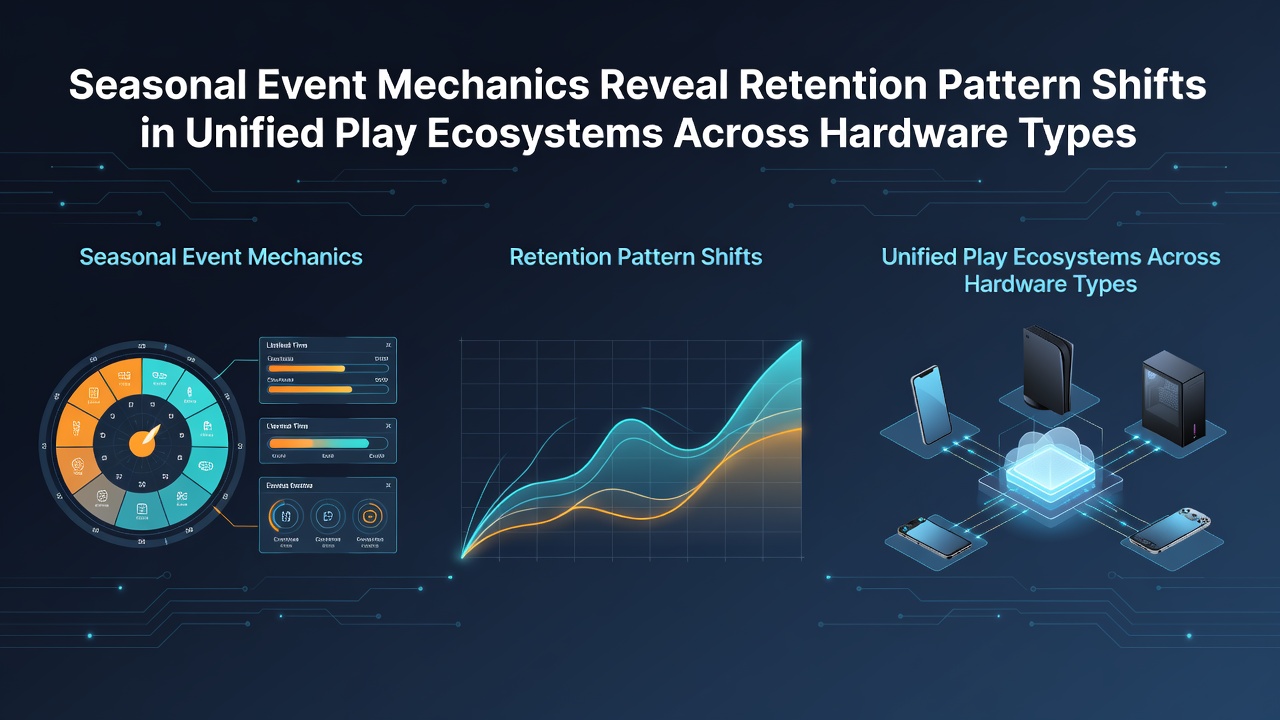
Seasonal event mechanics have emerged as key drivers of player behavior in unified play ecosystems where progress carries seamlessly between desktop, mobile, and console hardware. These limited-time features introduce new objectives, rewards, and narrative layers that encourage repeated logins while data collected through June 2026 shows measurable shifts in how long users remain active across device types. Researchers tracking aggregated telemetry note that such events alter daily active user curves and session lengths in patterns that vary by hardware category rather than remaining uniform.
Mechanics Behind Seasonal Structures
Seasonal events typically layer time-gated challenges onto existing game loops, including login streaks, collaborative goals, and tiered reward tracks that reset or evolve with each cycle. Developers integrate these elements into unified systems so that mobile swipe-based inputs and desktop precision controls contribute to the same overarching progress metrics. Studies from research institutions indicate that this shared infrastructure produces retention spikes during event windows followed by measurable drops once the seasonal period concludes, yet the magnitude of those drops differs when players switch primary devices mid-cycle.
Observed Retention Pattern Adjustments
Data aggregated across multiple titles reveals that seasonal events compress churn rates during active phases while extending the interval before players disengage permanently. Observers note that unified ecosystems amplify this effect because cross-device syncing removes friction that previously caused drop-off when users moved between hardware. Figures compiled through mid-2026 demonstrate that retention curves flatten less sharply on desktop platforms compared with mobile after events end, suggesting hardware-specific factors such as screen size and input method influence how long the motivational lift persists.
Hardware Variations in Engagement Response
Analysis of play patterns shows desktop users maintain higher post-event session frequencies when seasonal rewards tie into long-term progression systems, whereas mobile users exhibit quicker reversion to baseline activity levels once the event concludes. One study revealed that players who alternate between portable and stationary devices during a seasonal window sustain elevated retention longer than single-device cohorts. This outcome stems from the ecosystem's ability to preserve momentum regardless of hardware, allowing reflex-oriented sessions on mobile to feed into strategy-focused play on PC without resetting advancement.
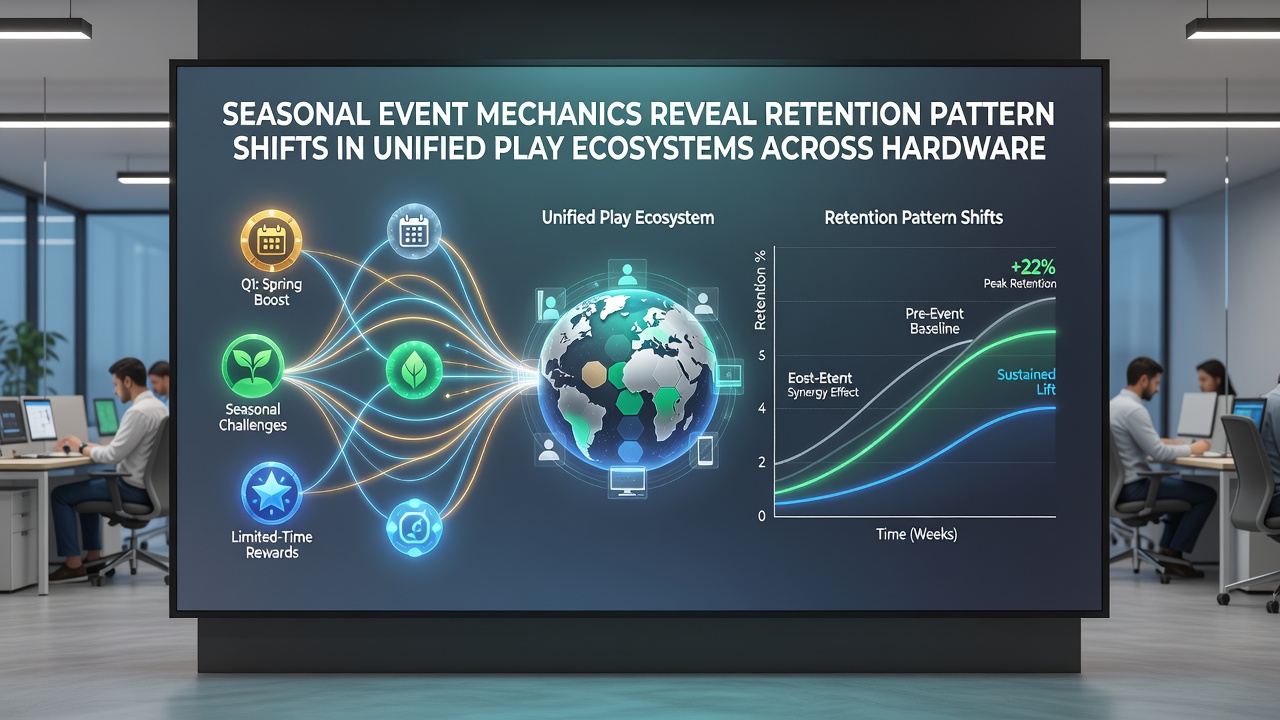
Industry reports from the Entertainment Software Association highlight that cross-hardware titles incorporating seasonal mechanics experienced steadier monthly active user growth through the first half of 2026 compared with non-event-driven counterparts. Those who've examined device-switching logs find that transitions increase during peak event periods, particularly when rewards require both quick mobile check-ins and deeper desktop sessions to optimize completion. This behavioral layering contributes to retention stability because the ecosystem accommodates varied play contexts without forcing users to choose one hardware exclusively.
Data Trends Across Unified Ecosystems
Telemetry collected from hybrid action-puzzle and multiplayer titles demonstrates that seasonal events produce distinct retention waves differentiated by hardware adoption. Mobile-first players show pronounced early spikes that taper rapidly after events, while desktop-centric users display more gradual decay curves. When ecosystems enable seamless synchronization, however, these divergences narrow because progress remains continuous. Research indicates that titles emphasizing unified advancement report 15 to 20 percent longer average player lifespans following seasonal cycles than fragmented-platform equivalents, according to metrics tracked by academic gaming laboratories in Europe and North America.
What's notable is how event design elements such as collaborative goals and rotating leaderboards interact with hardware capabilities. Desktop interfaces often support more complex social features that sustain engagement after the seasonal window closes, whereas mobile interfaces prioritize accessibility that drives initial participation but less sustained depth. Observers tracking these dynamics through June 2026 document that ecosystems balancing both strengths maintain steadier retention across the full player base.
Conclusion
Seasonal event mechanics continue to expose clear retention pattern shifts within unified play ecosystems spanning different hardware types. The data compiled to date underscores that cross-device synchronization modifies how players respond to time-limited content, with hardware influencing both the intensity and duration of engagement lifts. As developers refine these systems, retention trajectories are expected to reflect increasingly nuanced interactions between event design and the hardware contexts in which play occurs.