Seasonal Events Catalyzing Mechanic Transfers Across Mobile and Desktop Versions in Free Hybrid Titles
Written by Nils Hartmann · Jul 30, 2026
Seasonal Events Catalyzing Mechanic Transfers Across Mobile and Desktop Versions in Free Hybrid Titles
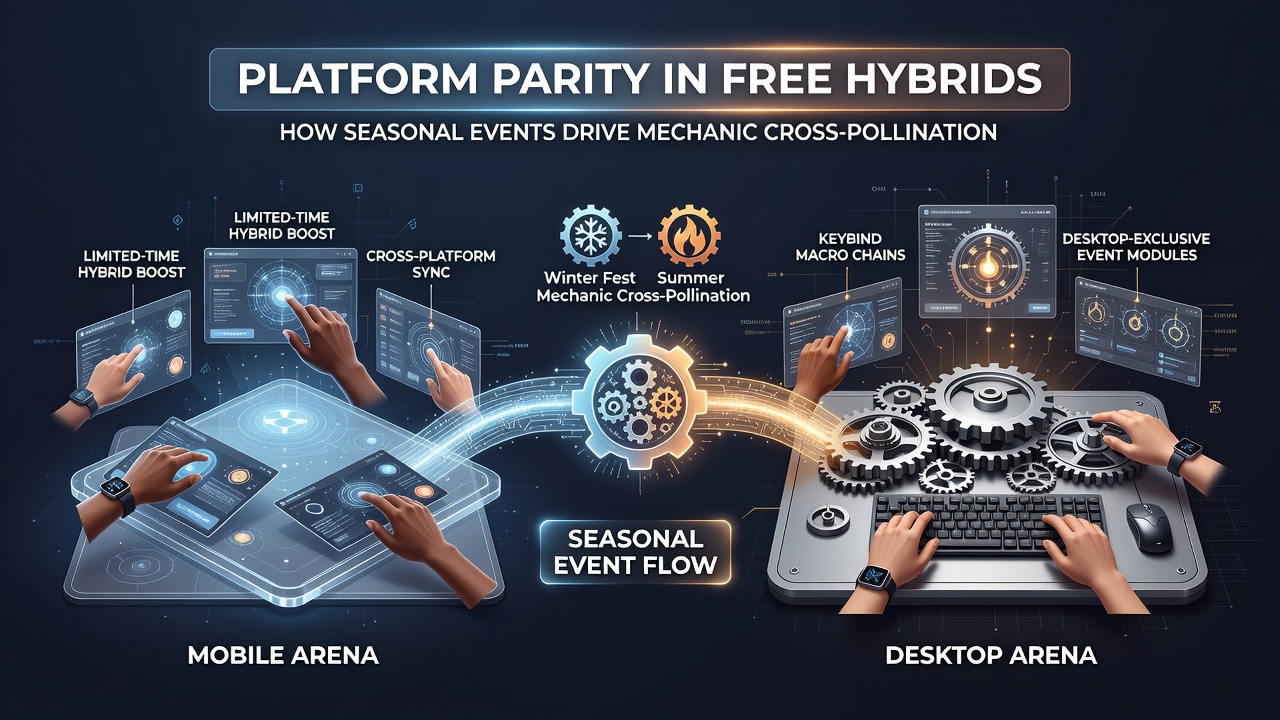
Seasonal events in free hybrid games have prompted the transfer of specific mechanics between mobile and desktop platforms, creating greater parity in how players engage with logic and reflex challenges, while data from download analytics and community feedback continue to shape these adaptations across both device types. Observers note that limited-time updates often introduce features first tested on one platform before they appear on the other, and studies of player behavior indicate these cycles accelerate when events align with holidays or major calendar dates.
Patterns Observed in Event Design
Research from industry tracking services shows that events running in July 2026 incorporated swipe-based navigation elements from mobile titles into desktop interfaces through adapted mouse controls, and the same updates carried precision timing mechanics from desktop versions back to touch-screen formats with adjusted sensitivity options. Analysts at organizations such as the Interactive Software Federation of Europe have documented how these exchanges occur when developers release synchronized patches that maintain core progression systems across devices, allowing players to switch platforms without losing event-specific rewards or challenge structures.
One study released by the Entertainment Software Association revealed that hybrid titles experienced measurable increases in cross-device sessions during seasonal windows, and figures indicate that mechanics like combo chaining or resource management migrated between platforms more frequently when events featured shared leaderboards. Data collected through download trend monitoring further demonstrates that titles blending action and puzzle elements saw higher retention rates when such transfers maintained consistent difficulty curves, regardless of input method.
Examples from Recent Hybrid Releases
Take the case of several arena-style games that introduced environmental interaction tools during summer events in 2026, where mobile versions gained drag-and-drop placement systems previously refined on desktop, while desktop clients received gesture shortcuts that mirrored mobile swipe patterns. Reports compiled by academic researchers at institutions focused on digital media studies confirm that these modifications emerged after aggregated review data highlighted friction points in cross-platform play, leading developers to align controls more closely during time-limited content drops.

Community-driven feedback loops have also contributed to these shifts, as forums and in-game surveys capture preferences that influence subsequent patches, and evidence from multiple regions shows developers responding by porting successful mobile-exclusive mini-games to desktop clients when participation metrics spike during events. According to analyses conducted by Canadian digital economy researchers, such cross-pollination tends to stabilize when events run for at least two weeks, giving sufficient time for data collection on mechanic performance across hardware types.
Impact on Player Progression and Retention
Progression systems in these hybrid games often evolve through event updates that standardize advancement paths, and observations indicate that unified reward structures reduce the need for separate mobile and desktop balance adjustments. Figures from global download reports illustrate that titles incorporating shared seasonal mechanics recorded steadier user growth compared with those maintaining strict platform separation, while academic papers on multiplayer design note that event-triggered changes frequently address device-switching trends documented in usage logs.
Yet the process remains iterative, with each cycle of events revealing new opportunities for feature exchange, and industry associations across Asia-Pacific markets have tracked similar patterns where logic-based puzzles from mobile events appear in desktop combat arenas through rebalanced timers and visual cues. Data compiled by university-led projects further suggests that these adaptations correlate with broader ecosystem interactions, where player communities on one platform advocate for mechanics popularized on the other.
Conclusion
Seasonal events continue to serve as primary drivers for mechanic cross-pollination in free hybrid games, fostering platform parity through synchronized updates that transfer elements between mobile and desktop environments. Evidence from download analytics, review aggregation, and regional industry reports demonstrates that these processes strengthen when developers align event timelines with player behavior data, resulting in more consistent experiences across devices. Ongoing monitoring by research institutions indicates that such patterns will likely persist as hybrid titles expand their seasonal content calendars.