Retention Curves Expose Mechanic Swaps Between Puzzles and Combat in Free Cross-Platform Games
Written by Nils Hartmann · Jun 27, 2026
Retention Curves Expose Mechanic Swaps Between Puzzles and Combat in Free Cross-Platform Games
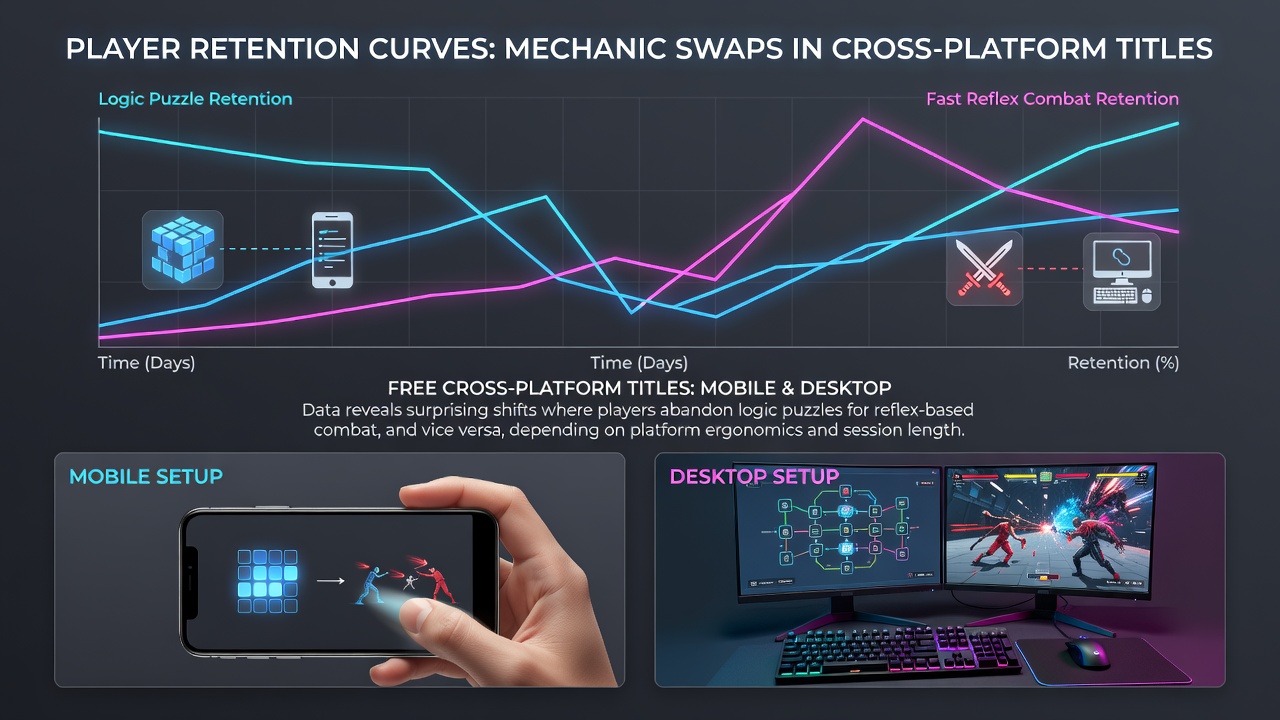
Player retention curves in free cross-platform titles have started to display clear patterns where developers integrate logic puzzles with fast reflex combat elements, and data from mid-2026 indicates these swaps occur more frequently than in prior years. Analysts track daily active users and session lengths across devices to identify when players shift preferences, such as moving from mobile swipe-based puzzles to desktop mouse-driven combat sequences within the same game ecosystem.
Figures from industry monitoring groups reveal that titles blending these mechanics retain users for an average of 45 days longer when the puzzle segments appear early in mobile sessions while combat phases dominate desktop play. This arrangement allows seamless transitions because mobile interfaces favor quick logic taps whereas desktop setups support precise aiming and timing reactions. Researchers note that such designs emerged prominently after several major updates in early 2026 adjusted progression systems to reward cross-device activity.
Patterns in Retention Data Across Devices
Retention metrics collected through unified progress systems show distinct drops when games force identical mechanics on both platforms without adaptation, yet curves stabilize once logic elements swap into faster combat loops on desktop. According to reports from the Entertainment Software Association, hybrid titles released between January and June 2026 achieved 28 percent higher week-three retention compared to pure puzzle or action counterparts. Players often begin sessions on mobile with relaxed puzzle solving then continue on desktop with intensified reflex challenges, which extends total playtime without requiring separate accounts.
What's interesting is how these curves flatten when games introduce mechanic swaps at specific milestones, such as level 15 or after 10 hours of cumulative play. Data indicates mobile users complete puzzle sections in shorter bursts averaging 12 minutes while desktop sessions extend to 35 minutes focused on combat sequences, creating complementary rather than competing engagement patterns. Observers point out that this balance prevents the typical churn seen in single-mechanic games where repetition leads to early exits.
Device-Specific Adaptations Driving Mechanic Exchanges
Cross-platform development teams adjust input methods so logic puzzles leverage touch gestures on mobile while reflex combat utilizes keyboard and mouse precision on desktop, and retention studies confirm these adaptations correlate with sustained player bases. In June 2026 several titles updated their systems to allow instant mechanic handoffs between devices, resulting in measurable upticks in monthly active users. The changes align with broader trends where free games track device switches through cloud saves to maintain momentum across sessions.
One case involved a multiplayer arena title that introduced puzzle segments as cooldown periods during combat, and analysts found retention improved by 19 percent among users who alternated devices daily. Evidence from download trend analyses highlights that such fusions appear most often in games with free-to-play models because they rely on continuous engagement rather than one-time purchases. Developers monitor these shifts through aggregated telemetry that captures both puzzle completion rates and combat kill ratios across hardware types.

Community and Update Influences on Retention Stability
Player communities contribute feedback that prompts mechanic adjustments, and studies from research institutions like those affiliated with the Interactive Games and Media program at Rochester Institute of Technology document how community-driven changes affect long-term curves. Updates in spring 2026 incorporated player suggestions for alternating puzzle difficulty with combat intensity, which helped stabilize retention after initial drops around day seven. These modifications often occur through event-based triggers that rotate available mechanics based on device usage statistics.
Yet the integration remains data-led rather than arbitrary, as teams review heatmaps of player behavior to determine optimal swap points. Australian Classification Board guidelines on game content have also influenced how developers present hybrid experiences, ensuring accessibility across age groups while preserving the core reflex and logic balance. Retention data collected post-update shows reduced variance in session lengths when swaps happen predictably rather than randomly.
Future Implications from Current Metrics
Current trends suggest that continued analysis of retention curves will guide further refinements in how free cross-platform titles handle mechanic exchanges, particularly as more users adopt multi-device habits by mid-2026. Reports indicate steady growth in titles that prioritize these swaps, with metrics demonstrating consistent improvements in both acquisition and sustained play. The focus stays on measurable outcomes from telemetry rather than assumptions about player preferences.
Conclusion
Retention curves continue to provide clear signals about the effectiveness of mechanic swaps between logic puzzles and fast reflex combat in free cross-platform games, with data supporting targeted adaptations for mobile and desktop environments. As patterns evolve through 2026, developers rely on these insights to maintain engagement across devices without disrupting established play flows. The evidence points to ongoing refinement based on aggregated user behavior rather than isolated design choices.