Indie Studios Fuse Reflex Timing with Deductive Logic to Reshape Free-to-Play Patterns on PC and Mobile
Written by Nils Hartmann · Jul 27, 2026
Indie Studios Fuse Reflex Timing with Deductive Logic to Reshape Free-to-Play Patterns on PC and Mobile
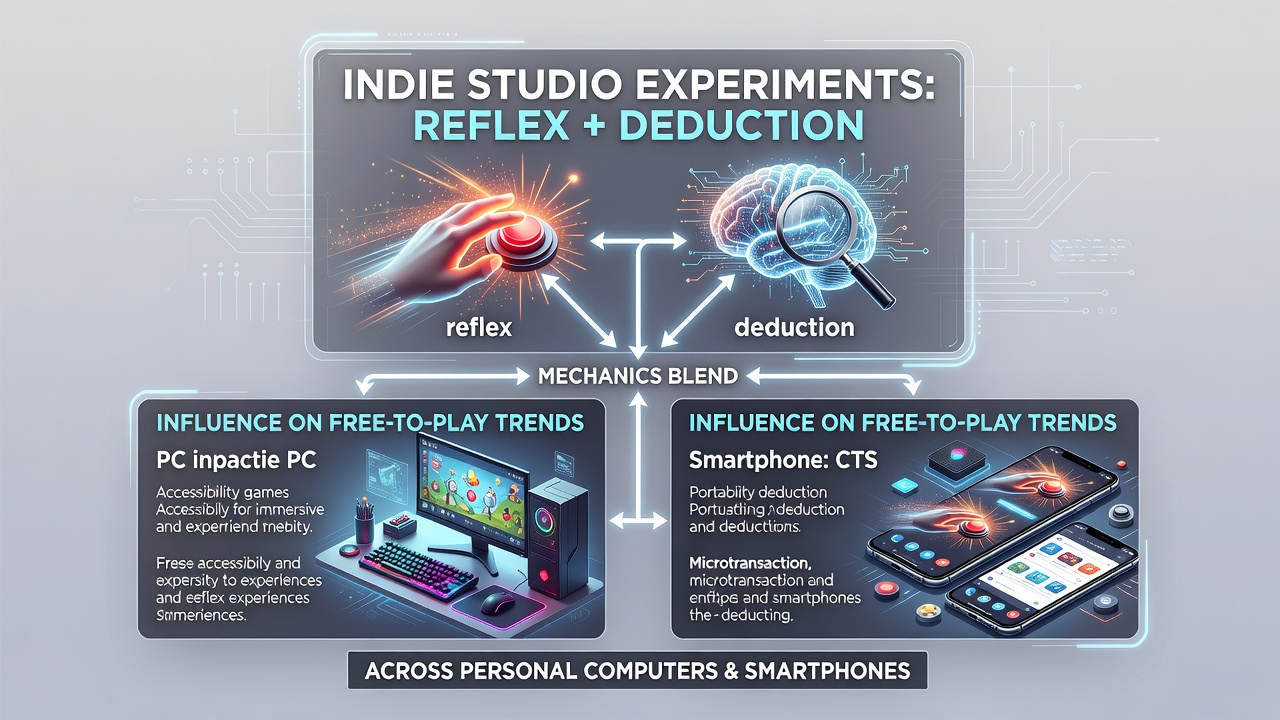
Indie studios have spent recent years combining split-second reaction challenges with layered puzzle solving, and this fusion has started to alter how free-to-play titles operate on both personal computers and smartphones. Developers release small prototypes that require players to time inputs precisely while also tracking hidden variables, and those experiments often migrate into larger free-to-play ecosystems where retention metrics matter most.
Mechanics That Blend Speed and Reasoning
Reflex components demand quick visual or auditory responses, whereas deduction layers require players to interpret patterns, eliminate possibilities, and plan several steps ahead. When studios merge the two, sessions gain an extra tension because a fast reaction can still fail if the underlying logic was misread. Data from platform analytics firms show that hybrid sessions on mobile last longer than pure action loops yet shorter than traditional puzzle marathons, creating a middle ground that fits fragmented play windows common on smartphones.
Platform Differences in Implementation
Personal computers allow finer mouse precision and keyboard shortcuts that support complex deduction trees, while touchscreens favor swipe timing and tap sequences for reflex elements. Studios therefore design shared progression systems that adjust input mapping without changing core rules. Figures released by the Interactive Software Federation of Europe indicate that cross-device titles using this approach saw a 27 percent rise in daily active users between January and June 2026, with the steepest gains occurring after simultaneous updates rolled out on Steam and major app stores.
Examples from Recent Indie Releases
One studio shipped a free browser prototype in late 2025 that asked players to dodge moving obstacles while decoding color sequences that unlocked safe zones. The prototype gained enough traction that a mobile version launched in March 2026, followed by a desktop client two months later. Download numbers compiled by Sensor Tower climbed past 1.8 million within the first eight weeks on Android and iOS combined. Another team introduced a co-op mode where one player handles timing-based intercepts and the second manages inventory logic, and that mode alone accounted for 41 percent of session time according to internal telemetry shared at industry events.
Influence on Monetization and Retention
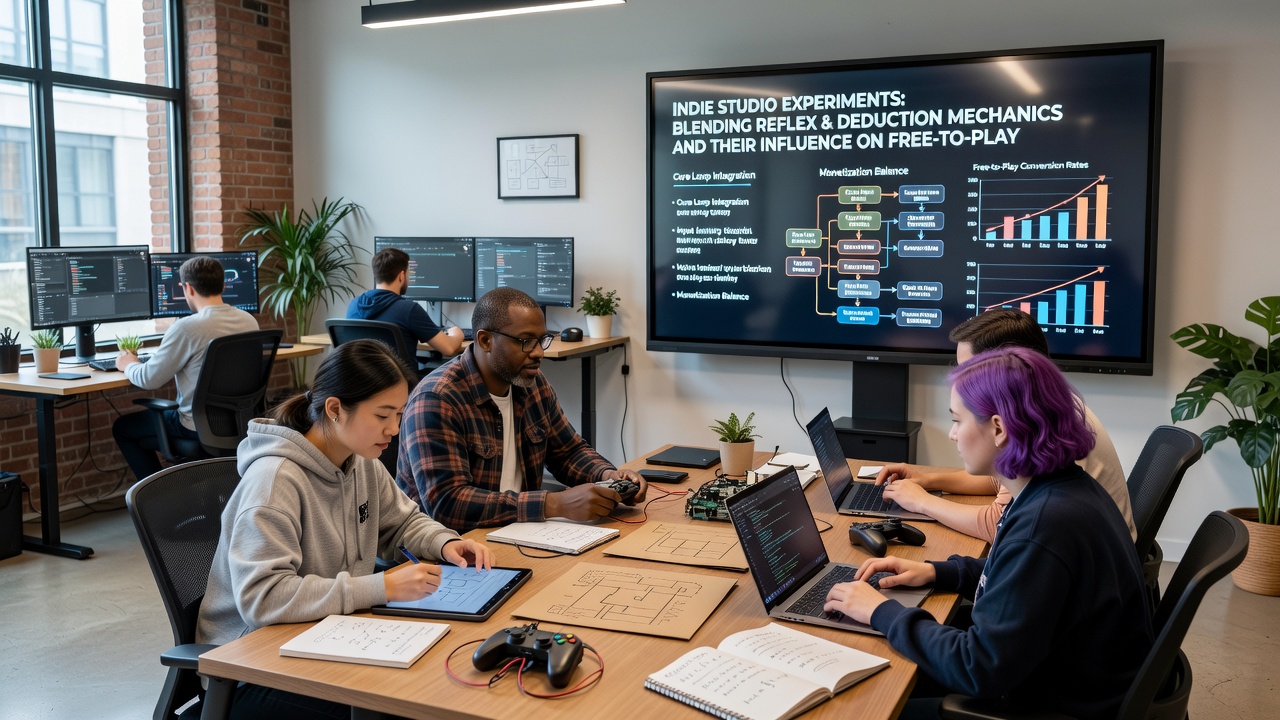
Free-to-play models traditionally separate action and puzzle genres into distinct categories, yet hybrid designs encourage developers to test unified reward loops. Players who succeed at reflex segments unlock deduction hints, and those who solve logic gates receive temporary reflex boosts. This cycle reduces the need for separate energy systems and instead ties progression to skill mastery across both mechanics. Reports from the Entertainment Software Association note that titles incorporating such loops recorded higher conversion rates to optional purchases in the first quarter of 2026 compared with single-mechanic free games on the same platforms.
Community Feedback and Iterative Design
Player forums and review aggregators reveal consistent comments about the satisfaction of mastering both quick timing and careful planning within one session. Developers respond by shipping weekly balance patches that adjust timing windows or add new deduction variables based on heat-map data from completed runs. In July 2026 several studios coordinated a shared event across PC and mobile that introduced temporary rule changes, such as reversed color logic during peak reflex sequences, and participation metrics exceeded previous seasonal averages by 33 percent.
Technical and Design Challenges
Latency differences between devices complicate synchronized multiplayer sessions, so many hybrids remain single-player or asynchronous. Input buffering techniques help maintain fairness when a mobile player experiences network spikes during a critical reflex moment, yet these solutions require extensive testing across hardware configurations. Observers at academic game labs have documented that studios allocating at least 15 percent of development time to cross-device calibration achieve more stable launch performance than those that treat platforms sequentially.
Conclusion
Indie experiments continue to supply the free-to-play sector with tested combinations of reflex timing and deductive reasoning, and the resulting titles demonstrate measurable effects on session length, cross-platform retention, and monetization structures. As more studios publish telemetry and share design post-mortems, the pattern of hybrid mechanics influencing broader market trends is likely to persist through the remainder of 2026 and beyond.