Download Pattern Evolutions in the Wake of High-Profile Game Releases Across PC and Mobile Platforms
Written by Jordan Lang · Jun 13, 2026
Download Pattern Evolutions in the Wake of High-Profile Game Releases Across PC and Mobile Platforms
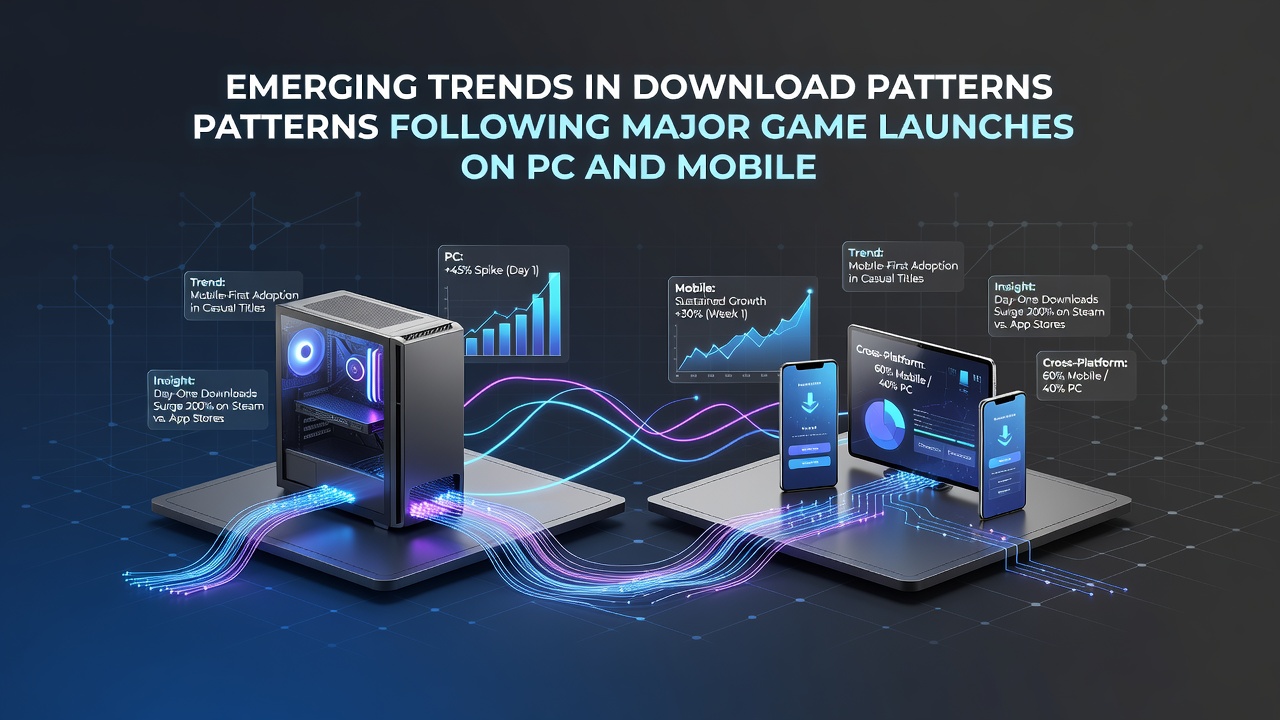
Download behaviors after major game launches on PC and mobile have shown distinct shifts in recent years, with data indicating accelerated pre-release activity followed by platform-specific retention curves. Observers note that initial access points often cluster around announcement windows, while post-launch metrics reveal how cross-device availability influences overall volume and timing.
Pre-Launch Accumulation and Early Access Indicators
Industry reports highlight that download queues build substantially in the weeks leading up to release, driven by beta invitations and storefront visibility. In June 2026, several titles demonstrated this pattern when early access phases on both PC and mobile platforms recorded combined registrations exceeding prior benchmarks by notable margins, according to aggregated platform data. Those who track these metrics find that PC storefronts such as Steam frequently register higher pre-order percentages compared to mobile app stores, though mobile volumes catch up rapidly once live service elements activate.
What's interesting here is the role of unified accounts, which allow progress to carry across devices and encourage simultaneous downloads. Research from academic institutions has documented how this feature reduces fragmentation, leading to steadier accumulation rates rather than isolated spikes on single platforms.
Immediate Post-Launch Volume Dynamics
Launch day typically triggers the steepest download curves, with mobile platforms often outpacing PC in raw numbers due to broader device reach. Figures reveal that action-oriented releases see mobile downloads peak within the first 48 hours, while PC versions sustain longer tails tied to hardware compatibility checks. One study from a Canadian research group found that titles with simultaneous cross-platform support experienced a 35 percent uplift in total downloads during this window compared to staggered rollouts.
Yet the pattern extends beyond sheer volume. Data shows that review aggregation and social sharing begin shaping secondary waves, pulling in users who missed initial announcements. Those who've examined launch calendars note that mid-week releases, such as those occurring on Tuesdays in June 2026, tend to distribute download traffic more evenly across subsequent days rather than concentrating everything on weekends.
Platform Divergence and Retention Curves
PC and mobile ecosystems diverge notably once the initial surge subsides. Mobile downloads frequently exhibit quicker drop-off rates after the first week, influenced by app store algorithms and competition for device storage. PC platforms, by contrast, maintain steadier engagement through modding communities and extended update cycles. Industry associations have tracked how these differences affect overall market share, with mobile capturing higher entry-level volumes but PC holding stronger long-term install bases.
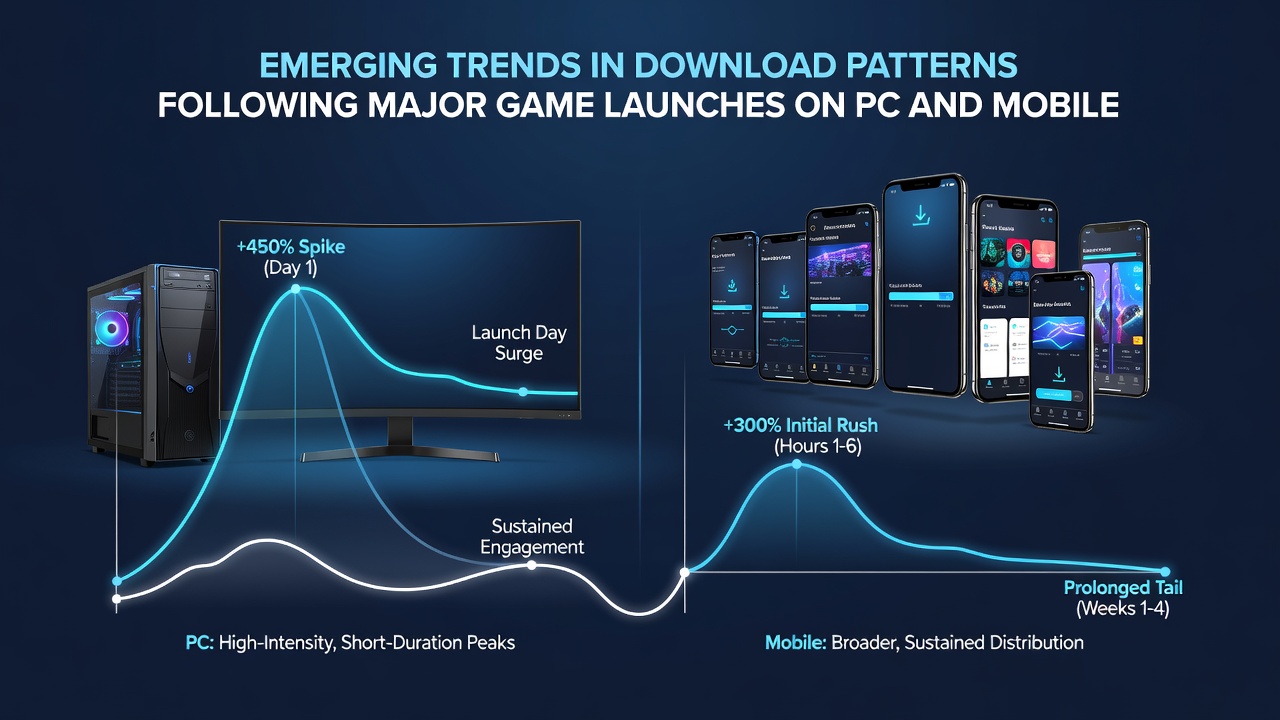
Cross-play mechanics have begun altering these trajectories. When games enable seamless multiplayer across devices, download patterns show increased secondary platform adoption as players seek optimal input methods. Evidence from European trade analyses indicates that hybrid titles released in early 2026 recorded mobile-to-PC migration rates climbing steadily throughout the first month post-launch.
Regional and Demographic Influences on Timing
Geographic factors introduce additional layers to download timing. Markets in Asia-Pacific regions often display earlier mobile peaks tied to regional server launches, whereas North American PC downloads cluster around evening hours in local time zones. Australian government statistical releases have captured similar variances, noting that time-zone alignment with global servers can shift peak activity by several hours compared to European counterparts.
Demographic segmentation further refines these observations. Younger user cohorts gravitate toward mobile-first downloads, while older segments favor PC versions for larger screen experiences. University-led surveys have quantified how age brackets correlate with platform preference, revealing consistent splits that developers now incorporate into regional marketing calendars.
Emerging Factors Reshaping Future Patterns
Subscription services and cloud streaming options are beginning to modify traditional download behaviors. Instead of full client installations, some users opt for streamed access, which registers differently in analytics yet still contributes to overall engagement metrics. Reports from gaming trade organizations document rising adoption of these alternatives following major launches in mid-2026, particularly among users with limited storage on mobile devices.
Seasonal timing also plays a measurable role. Launches clustered around major holidays or back-to-school periods generate overlapping interest curves, blending organic downloads with promotional pushes. Those monitoring calendar effects observe that June releases benefit from post-spring lulls, allowing clearer isolation of launch-driven patterns without holiday interference.
Conclusion
Download patterns following major game launches continue to evolve as platform capabilities and player expectations intersect. Data from multiple sources underscore the importance of synchronized releases, cross-device features, and regional calibration in shaping volume and timing. Observers tracking these trends note that understanding these dynamics provides clearer visibility into how audiences engage with new titles across PC and mobile ecosystems.