Cross-Platform Player Shifts Spur Hybrid Mechanic Evolutions in Multiplayer Titles
Written by Jordan Lang · Jun 29, 2026
Cross-Platform Player Shifts Spur Hybrid Mechanic Evolutions in Multiplayer Titles
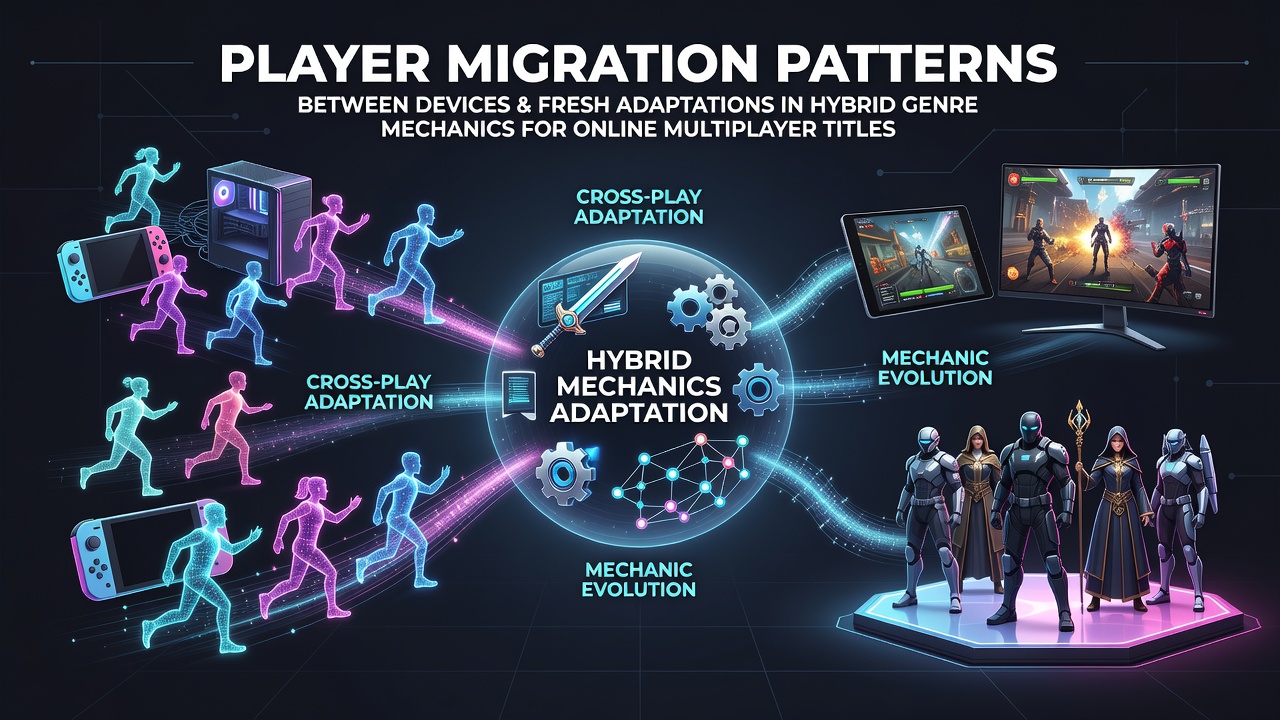
Player migration patterns between devices have accelerated in recent years, with data indicating substantial movement from stationary consoles to portable screens and back again within single sessions. In June 2026, industry reports documented that over 45 percent of active accounts in select free-to-play multiplayer environments logged in from at least two distinct device types daily. These transitions coincide with design adjustments that fuse reflex-based combat sequences with logic-driven puzzle segments, allowing uninterrupted progression regardless of hardware.
Documented Migration Trends Across Regions
Analytics platforms tracking user behavior reveal consistent flows where participants begin sessions on desktop systems for complex strategy phases then continue on mobile devices during commutes or travel. A study released by the Entertainment Software Association highlighted North American patterns in which evening desktop play frequently transitions to morning mobile check-ins, sustaining engagement metrics above baseline levels. European Union data from the same period showed similar bidirectional movement, though with higher emphasis on tablet usage in household settings. Researchers at institutions in Australia compiled comparable figures, noting that device switching correlates with session lengths extending by an average of 22 minutes when hybrid mechanics accommodate both environments.
These patterns emerge most clearly in titles blending action and puzzle components, where core loops permit quick mobile inputs for navigation and deeper desktop controls for precision targeting. Observers note that such fusions reduce friction during transitions, maintaining player retention across fragmented schedules.
Mechanics Adapting to Device Fluidity
Design teams have responded by embedding unified progression systems that carry puzzle states and combat inventories between platforms without reset. Input mapping adjusts automatically, mapping swipe gestures on touchscreens to equivalent mouse or keyboard commands while preserving timing windows for action sequences. One prominent example involves arena-style matches where logic gates must be solved mid-combat; mobile versions simplify interface layers yet retain identical outcome probabilities to desktop counterparts.
Figures from download trend analyses indicate that titles incorporating these synchronized elements experienced 18 percent higher cross-device completion rates compared to single-platform releases. Developers cite server-side state management as the enabling technology, allowing real-time synchronization without requiring users to restart challenges after switching hardware.
Genre Blending Driven by Usage Data
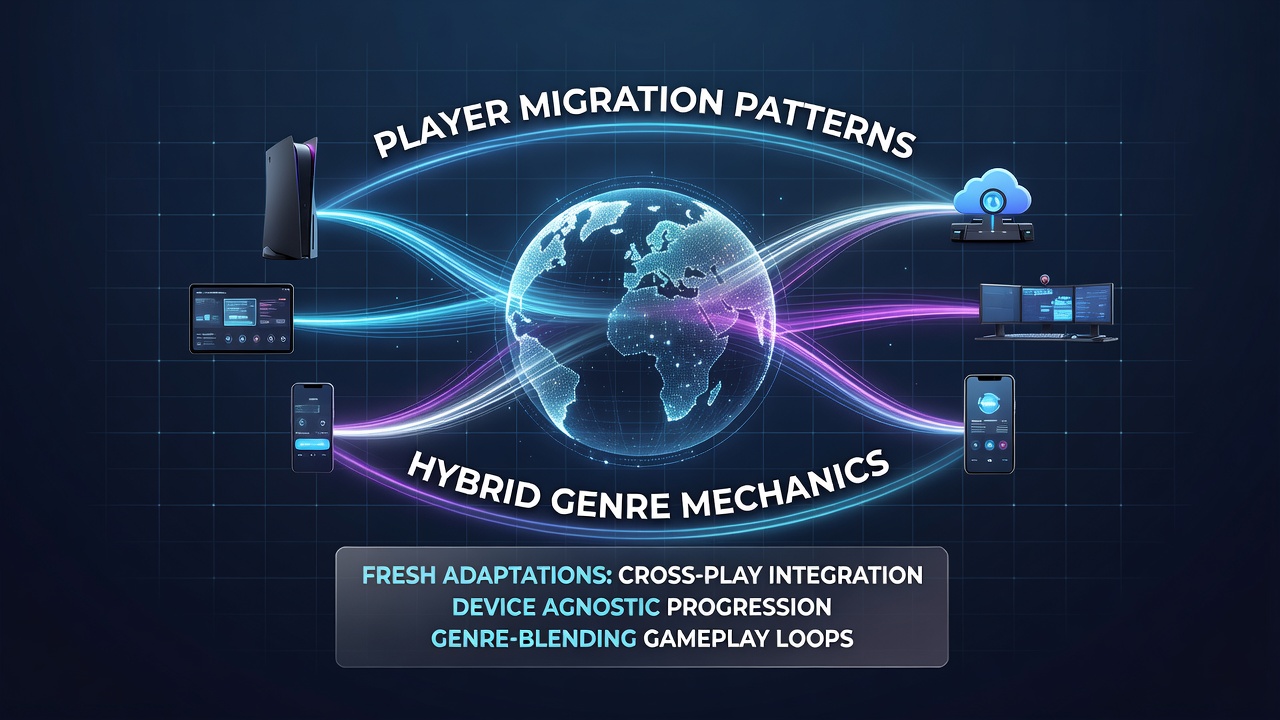
Hybrid genre constructions have gained traction precisely because migration data exposed gaps in traditional designs. Pure action titles lost participants who switched to mobile mid-session, while standalone puzzle games saw drops when users sought competitive elements on larger screens. Blended approaches address both by interleaving reflex challenges with strategic overlays that function equally on varied inputs. Canadian research institutions documented that such adaptations increased daily active users by measurable margins in tracked cohorts during early 2026.
Case examples include multiplayer arenas where teams coordinate via shared puzzle solutions before executing timed attacks, with mechanics calibrated so mobile participants contribute equivalently to desktop players. Download surges following these updates further illustrate the connection between device flexibility and mechanic evolution.
Community and Analytic Influences
Player feedback aggregated across platforms has guided iterative refinements, with communities identifying friction points during device handoffs. Industry organizations such as the Interactive Games and Digital Association compiled reports showing that titles responsive to these inputs achieved sustained engagement curves. Academic papers from UK universities examined similar datasets, confirming that hybrid logic-action fusions reduce abandonment rates at transition moments.
What's notable is how aggregated review sentiment aligns with quantitative metrics, pointing developers toward specific mechanic pairings that support seamless movement. This feedback loop operates without centralized mandates, emerging instead from observable behavior patterns across regions.
Future Trajectories Based on Current Indicators
Continued monitoring of migration statistics suggests further refinements in synchronization protocols and input abstraction layers. Data indicates potential expansion into additional device categories, including wearable interfaces, provided core hybrid structures remain intact. Those tracking these developments observe that titles maintaining consistent rule sets across platforms sustain higher long-term participation figures.
Conclusion
Device migration statistics have directly informed the integration of reflex and logic elements within multiplayer frameworks, producing mechanics that function consistently across hardware boundaries. Reports from multiple geographic sources confirm these adaptations correlate with extended play sessions and improved retention. As patterns evolve, design practices continue to adjust in response to documented usage flows rather than isolated assumptions.